
Nuclear Power plants have to be the most perfected technology in use because it is also the most high-risk. Here, leaks that are perhaps measured in molecules per second can prove fatal. The design and structure have to hold without any mishaps for generations to come. What then makes these haunted cathedral-like halls of nuclear power plants fail-proof? Nuclear-grade universal expansion joints.
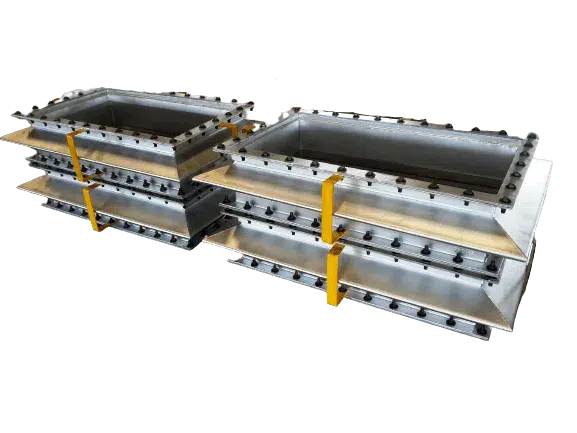
Universal expansion joints function as adaptive connectors. They respond to temperature-driven changes in size and material. The universal joint manufacturer produces these from materials like steel, Inconel, or titanium. The corrugated pieces act as protective barriers against thermal expansion, mechanical shifts, and vibrations.
Expansion joints designed for nuclear facilities are critical. The leading universal joint manufacturer in India dedicates exceptional effort to achieve the rigorous specifications.
Universal Joints: The Silent Guardians
If you’re wondering how these joints play a crucial role in nuclear technology, you are in the right place.
- The Anatomy of Defence
An expansion joint used in a nuclear plant is relatively simple. It is a structure of two bellows connected with a pipe. This structure of bellows is further wrapped in thermal insulated shields. The best universal joint manufacturer stacks three to five thin metal layers. All these layers are independently capable of tolerating extreme environments. This fail-proof technology ensures utmost caution. If the outer layer cracks, the inner layers continue protecting the overall structure. Leak detection systems are also often installed between the layers. This ensures more caution.
- Material Alteration
Nuclear plants are heat chambers. An average 100m steam pipe can expand and contract up to 30 cm in this process. But where the best universal joint manufacturer truly has to show their work is in the case of material transformation. When joints are exposed to neutrons near the reactor core, they may be altered at an atomic level. This can transmute it into a different element. When the material’s properties are changed this much this fast, the joints would have been rendered useless. Yet the manufacturers account for this alteration. Designing the joints with wider margins or replacing them earlier. This makes R&D and finite element analysis very important in producing these bellows.
Conclusion
Nuclear reactors, their generators, and turbines are all technology that makes the world what it is today. But the universal joints manufacturers create the silent soldiers of nuclear technology. Simple as they are, they have a certain depth. To understand it, check out the different kinds of joints that Flexpert produces!