
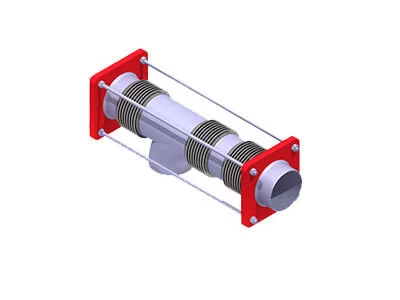
Are you eager to know how to reduce operational downtime in your industrial pipeline system? Reducing operational downtime must be a serious cost-saving factor for every industrial unit. Whether you are dealing with oil & gas, chemical, power generation, or HVAC systems, reducing operational downtime in industrial pipelines is vital.
When pipelines are out of service, productivity and energy efficiency are hampered. Thus, it is vital to know how to inspect and replace piping bellows without resuming regular operations. Replacing old metal bellows with a premium-quality metal bellows expansion joint is highly essential for operational safety. Maintaining flexible piping joints and ensuring smooth operational aspects are highly essential for every industrial unit.
Let’s explore this blog to know how to inspect and replace piping bellows without downtime.
Inspection and Replacement Process of Piping Bellows
In this segment, we will discuss the inspection and replacement process for piping bellows without disrupting their regular operations.
- Start with visual inspection
Regular visual inspection of piping bellows is the first step to protect pipelines from major failures. Piping inspectors should check
- Any minor cracks in the bellows surface
- Any minor sign of corrosion
- Sudden misalignment in piping adjoining
- Mark of fatigue in the piping bellows due to heavy pressure
In cases of minor disputes, the piping inspector should notify the authority of the immediate replacement of piping bellows with high-quality bellows.
- Use of online integrated monitoring tools
Advanced industries are shifting towards modern, integrated monitoring systems. If every industrial unit uses a smart sensor system, it can track
- Pressure changes in the pipelines
- Vibration frequency in the pipelines
- Thermal expansion cycles
These are major indicators that show pipelines are not working properly and need replacement. Predictive analytics enable piping replacement without an operational shutdown.
- Focus on the’ hot swap’ method
For some critical industrial applications, hot swapping can replace a damaged bellows with a new metal expansion joint while the system is in operation. Through proper setup and safe operational efficiency, the replacement of old bellows with new bellows becomes possible.
In such a case, the piping system requires some setup, such as isolation valves and controls for upstream and downstream operations. Apart from that, temporary bypass lines maintain the free flow of fluid for system integration.
If you hire top-notch mechanical units to replace the old bellows with new ones, they assemble prefabricated bellows for immediate piping fittings.
During this process, every industrial unit needs close coordination between the mechanical and operational teams to reduce downtime.
- Use of a temporary expansion joint
When mechanics remove bellows from pipelines for operational reasons, installing temporary expansion joints is essential. These techniques ensure that the pipelines maintain proper alignment and that the pressure within them remains balanced.
This process is highly essential in HVAC and chemical processing plants, where continuous flow is essential.
- Quick connect expansion bellows
Modern bellows come in a variety of designs for quick connection and faster installation. Without hours of welding, you can easily fit the latest designer bellows and maintain operational efficiency.
Conclusion
At the end, we must say that you do not need to resume your piping operation due to the installation or replacement of the old bellows. If you choose the most unique form of metal bellows, you can easily replace them with old ones. Contact Flexpert Bellows to buy the premium range of metal bellows to maintain smooth piping operation without downtime.