
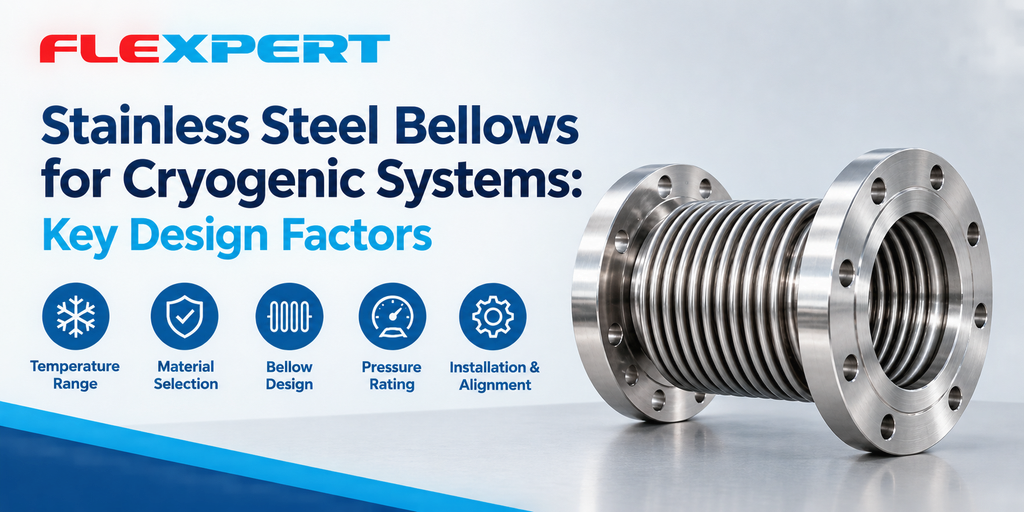
Working with extremely cold fluids requires careful planning. Even a small mistake in a pipeline can impact the safety and performance of an entire system. Cryogenic systems handle fluids such as liquid nitrogen and liquid oxygen at very low temperatures. As a result, these systems need flexible parts that can accommodate movement without losing strength. In these cases, stainless steel bellows or pipe expansion joints can meet the need. They absorb movement and reduce stress on connected pipes and equipment.
However, choosing the right pipe expansion joints requires attention to several factors. In this blog, we will discuss the key design factors for stainless steel bellows in cryogenic systems.
What are the Main Design Factors for Stainless Steel Bellows?
Stainless steel bellows are flexible metal parts used in pipes and other equipment. They help manage movement caused by temperature and pressure changes. Here are the key factors to consider when choosing them for cryogenic use.
- Select the Right Steel
The first key step in choosing the right metal bellows is selecting the right steel. The choice of steel matters when working in extreme cold. Some steel grades work better than others at very low temperatures.
Hence, the material must stay strong and flexible during use. It should also resist rust and suit the fluid in the system. The right choice can help decrease damage and support long-term use.
- Check Temperature Changes
Another key factor when choosing metal bellows is temperature change. Metal pipes shrink as they cool. This change can put immense pressure on joints and other parts.
Stainless steel bellows help manage this movement. Their flexible shape lets pipes move without putting too much stress on the system. Thus, engineers must check how much the pipes may shrink before choosing a design.
- Consider Working Pressure
Working pressure is another key factor in selecting metal bellows. Some cryogenic systems operate under high pressure, while others operate under vacuum. So, the bellows you choose must suit the working conditions. Engineers should check the pressure limits before choosing a product. This step helps prevent damage and supports safe operation.
- Look at Flexibility
Looking at flexibility is extremely important while selecting a bellow. Bellows may bend and move many times during use. Too much stress can also damage the metal over time. So, the design should match the movement the system needs. The number of folds also affects how easily the bellows can move.
Flexpert Bellows offers single-ply and multi-ply metal bellows. Multi-ply bellows have several thin metal layers. This design can offer greater flexibility and help reduce the force on connected equipment.
- Prevent Leaks
Leaks can affect the safety and performance of cryogenic systems. The risk depends on the fluid and the working conditions. Good design and careful production can help reduce this risk. Hence, engineers should check the welds, materials, and overall build quality. They should also ensure that the bellows can handle the required pressure and temperature.
- Choose the Right Design
We all know every system has its own needs. Hence, temperature, pressure, space, and pipe movement can all affect the choice of bellows. Before selecting the right bellows, carefully check these needs. You should also consider how the bellows will fit into the system. A suitable design can help reduce stress and support smooth operation.
The Conclusion
Stainless steel bellows play a vital role in cryogenic systems. The right choice of material, flexibility, and pressure rating can help prevent damage and leaks. Careful planning also helps the system work well in extreme cold. Are you looking for metal bellows for your industrial system? Turn to Flexpert Bellows, a renowned pipe expansion joint manufacturer for single-ply and multi-ply metal bellows. Visit the Flexpert Bellows website to explore its products and discuss your needs with our team.