
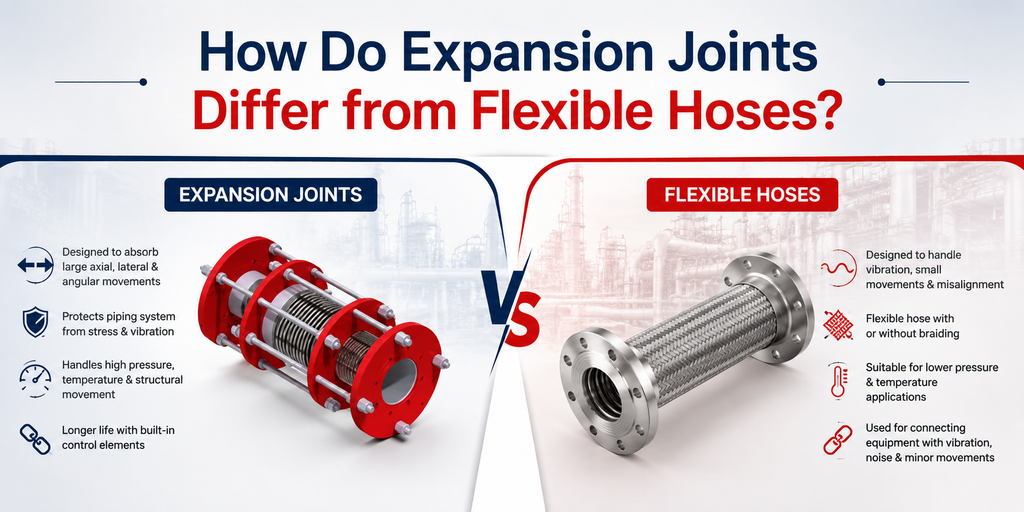
Expansion joints and flexible hoses are popular for absorbing movement. Both are helpful in reducing stress on the piping system. However, they may seem to be interchangeable and have similar looks.
If you are presuming that both can be used the same way, then better think twice. By making your way to a reliable and trustworthy pipe expansion joints manufacturer, it may become easy to get a deep insight into some vital applications.
As they are manufactured for different types of movement, making out the difference between expansion joints and flexible hoses may become easy.
How Do Expansion Joints Differ from Hoses Purpose-Wise?
Expansion joints are designed exclusively for absorbing thermal expansion, mechanical movements and contraction in both pipes plus ducts. They are manufactured exclusively for accommodating axial, angular and lateral movements due to changes in temperature and shifts in structure.
Hoses are used for connecting different components in piping systems where high flexibility and easy movement are needed. They can absorb vibrations where movement may be anticipated.
What Makes Expansion Joints More Rigid Than Flexible Hoses?
Usually, top manufacturers utilise high-quality metal, rubber bellows and fabric while manufacturing exclusive graded pipe expansion joints. They are also reinforced using various materials like steel for withstanding internal pressure and accommodating movements. With flanges and other types of fittings, they may be considered to be more rigid than flexible hoses.
But flexible hoses are manufactured using materials like PVC, braided metal, rubber and polypropylene. Such a composition makes it easier for these hoses to flex, bend, and handle dynamic movement plus vibration.
How do flexible joints differ from Flexible Hoses in Applications?
Expansion joints are found in pipework systems where elevated temperature is common. Some of the most common places include steam lines, HVAC systems, exhaust systems and industrial pipelines that undergo contraction and expansion.
But flexible hoses are used in those systems where parts are supposed to be connected with the highest flexibility. Some of the most common examples include water supply lines, fuel lines and places where pipeline configuration may change frequently.
What about the Durability Factor?
Exclusively manufactured pipe expansion joints comprise highly durable materials and are designed specifically to last in harsh environments. They are best suited for handling where extreme fluctuations in temperature and high stress are common.
On the other hand, flexible hoses, apart from being durable and flexible, are highly susceptible to wear and tear. The destruction may take place under abrasive conditions that include repetitive bending.
What about the Maintenance Cost Associated?
Expansion joints, being extremely static and rigid, require less maintenance post-installation. Carrying out regular inspection and minor repairs may prevent early breakdown that may otherwise take place due to constant expansion and contraction.
But flexible hoses may need regular inspection plus replacement. Being susceptible to cracking and wearing out in harsh conditions, they may cause accidents if the maintenance part gets skipped.
As a Final Word!
From above, it is clear how expansion joints differ from flexible hoses. Your search for high-quality joints may conclude with a highly reliable pipe expansion joints manufacturer like Flexpert Bellows.
With a wide range of options available, you may choose the best that matches your preference at a moderate cost.