
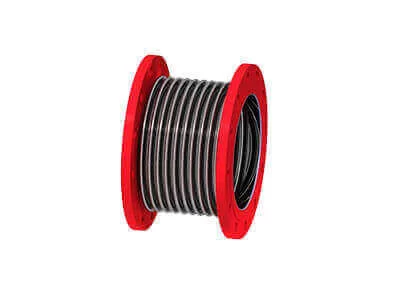
Material selection is a key issue in engineering and manufacturing regarding component performance and life. It entails the compatibility of material properties and conditions of use, including environmental exposure, load-carrying behavior, wear resistance, and chemical compatibility. Generally, this will be the utmost priority towards realizing maximum performance and life. If you want to have a problem-free working process, then the selection of Metal bellows expansion joints will be the key.
When materials are well matched to their environment and use, components realize outstanding reliability, lower maintenance requirements, and greatly extended lifetimes. Bad material choice, on the other hand, can lead to premature wear, corrosion, cracking, or failure, with expensive repair and replacement. In aerospace, plumbing, or automotive systems, wise material choice is the key to long-term performance.
Different Modes Material Selection Impacts Component Lifetime
- Corrosion resistance
Materials such as stainless steel and specially designed polymers show very high resistance to water and almost all chemicals, and hence their life and durability become much improved under harsh conditions. Not only does their hostility resistance extend their running life, but also reduces the maintenance rate to a very large extent, making them a perfect selection for harsh conditions. You can successfully put your project into practice by utilizing the best Metal Expansion Joint.
- Thermal stability
In hot climates, the demand for materials that are resistant and stable in shape when subjected to high thermal stress is of critical priority. High-performance ceramics and heat-treated specialty grades of alloys are assigned the highest priority and include unprecedented stability and resilience. These materials not only survive in extreme heat conditions but also provide consistent performance even in the most severe and demanding environments. Their unique characteristics make them a critical requirement in use where performance and life cannot be traded.
- Wear and abrasion resistance
In machine parts, material application with very low friction properties and use of high-performance wear-resistant coatings reduce surface wear over time by a very huge factor. This improvement factor not only provides optimal lifespan to moving parts but also provides a very smooth movement. This, in turn, contributes to higher efficiency through energy loss minimization when moving, thus enabling mechanical systems to operate at optimal performance for a longer period.
- Weight efficient
Lightweight materials, being innovative composites, are a key efficiency factor while providing unmatched durability. Such a subtle equilibrium is especially critical in applications such as transportation and space exploration, where a pound removed is a superior performance and sustainability advantage. To weigh lighter without losing structure, such innovative materials are the solution to breakthroughs that not only give functional performance an upgrade but also green the globe.
- Tolerance to load and no stress
It is extremely important to choose materials that have ultimate tensile strength and fatigue strength if high endurance is required to ensure structure integrity under heavy or continuous loads. This prudent choice not only improves endurance but also delivers repeated loading stresses without impairing performance or safety.
Material selection is a key consideration in the degree to which-and for how long-a component will perform in its designed application. The appropriate material can significantly lower failure and maintenance chances, as well as peak performance. Whether designing for strength, corrosion protection, or thermal life, wise material selection keeps your components working and on the job for years to come.