
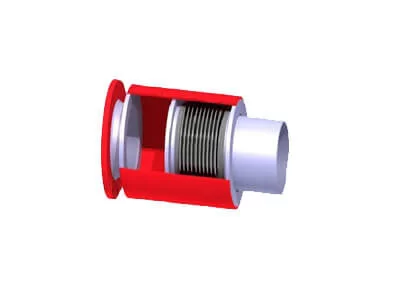
Flexible couplings, flexible couplings, or expansion couplings are needed in mechanical use because they connect two rotating shafts and permit misalignment, vibration, and motion. Flexible couplings give performance, protect components, and supply smooth power transmission. With the various types of metal expansion joints that exist, one must choose an appropriate one for your application based on a clear understanding of your system requirements.
Choice of a suitable flexible joint is governed by variables such as shaft misalignment, torque and speed requirement, surroundings, and available space. Requirements for application such as precision, heavy-duty application status, or shock absorption are also properly addressed. When you match joint specification to the system demand, you can be in a position to achieve greater reliability, lower maintenance cost, and extended coupling and driven equipment life.
Tips For Making the Right Flexible Joint Selection
The proper choice improves performance, minimizes wear, and saves downtime. What your system demands and the nature of different joint types is the key to the right choice.
- Type and amount of misalignment
Determine the misalignment type in your system-angular, parallel, or axial. Determining the correct type of misalignment is critical since different flexible joints can tolerate different types and amounts of misalignment. By determining the misalignment correctly, you can choose the correct metal bellows expansion joint providing maximum compensation and therefore the performance and life of your system.
- Vibration and shock absorption
Where there is vibration or cyclic sudden loading of systems in use, shock-absorbing joints that will be capable of vibration transfer dissipation are of highest priority. Special-purpose joints are designed to improve system stability and function by avoiding dynamic forces, improving smooth motion, as well as component longevity.
- Space constraints
Ensure the joint is appropriately measured to fit easily into available space with enough clearance for comfort and easy mounting. Also ensure that it will accommodate all the components mounted and provide optimum performance and maximum functionality.
- Application type
Zero-backlash couplings are of utmost significance for high-precision applications like robotics or CNC machine tools for operational reliability and precision. In heavy-duty equipment applications, elastomeric or gear-type couplings will generally be required that can possess the required strength and durability to withstand high stress and torque without compromising optimum performance.
- Torque and speed requirements
Ensure that the joint is sufficiently strong to support maximum torque ratings and operating speeds your system requires. The metal expansion joint should be able to bear structural stresses, essentially keeping any probable failure and wear and tear in check over the long run. Don’t forget the material and design factors that make it strong and able to bear harsh conditions, eventually making your system last longer and function efficiently.
Conclusion
The selection of the best appropriate flexible joint is to know your system’s performance requirements and align these with the joint’s requirements. Through formal misalignment, torque, vibration, and environment study, you are able to offer long equipment life, enhanced performance, and reduced maintenance. Read the supplier’s documentation and, if necessary, a technical consultant to deliver the best application for your application.