
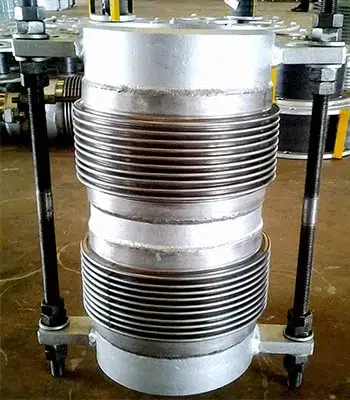
The cement and steel industries primarily operate in high-pressure and high-temperature environments, presenting significant challenges in maintaining the operational integrity of piping systems. Among the various types of industrial components, axial expansion joints are essential equipment in piping systems of steel and cement plants. The premium-quality lateral expansion joint in India always provides the most flexible connector design, which can absorb thermal expansion, and a robust construction in the piping system. This unique and robust mechanism of the axial expansion joint is vital to run the steel and cement plant adequately. Let’s discuss, we will explore the importance of axial expansion joints in steel and cement plants.
What Do You Mean by Axial Expansion Joints?
Axial expansion joints are durable and flexible piping connectors installed within the piping system to absorb sudden movement in the axial direction caused by thermal expansion, vibration, and pressure fluctuations. Stainless steel bellows are the basic components of axial expansion joints that can be changed in length along with the pipe, without damaging the pipe structure. To provide a robust piping structure in a cement and steel plant, consider installing axial expansion joints.
Why Does a Steel and Cement Plant Need Axial Expansion Joints
Both steel and cement plants operate in extreme temperatures and utilize heavy equipment. This heavy equipment and extreme conditions can damage the piping construction without proper joint construction. Let’s discuss how axial expansion joint protects steel and cement plants from piping destruction.
- Managing thermal expansion in temperature areas
Steel plants primarily focus on smelting and rolling, which generate intense heat. Whereas cement plants also operate in high temperatures. These certain surroundings in the cement and steel plant cause significant damage to the piping system.
Without the use of axial expansion joints, the following situations may arise-
- There must be huge cracks in the piping construction of the cement and steel plant under the thermal stress
- There must be a sudden leakage in the fixed joints of the piping system
- There must be structural damage over a time period
Thus, it is vital to construct a durable, quality axial expansion joint in the cement and steel plant to prevent pipe damage.
2. Enhance the equipment’s usefulness
As we all know, cement and steel plants require huge construction costs; thus, it is vital to avoid unnecessary equipment replacement costs for financial savings. When you install premium-quality axial expansion joints in the piping system of the cement plant, it will enhance the lifespan of the following equipment, such as
- Boilers
- Chimneys
- Heat exchangers
- Flue gas lines
A reduction in mechanical and thermal stress signifies fewer system breakdowns, less downtime, and lower machinery maintenance costs.
- Improve the safety in the workplace
Steel and cement plants are mainly associated with huge risk and uncertainty. A sudden piping system failure may lead to uncontrolled thermal expansion in the plant, resulting in serious gas leaks, fires, explosions, and the sudden shutdown of the plant.
By installing the axial expansion joints, a secure working environment can be created and a safe operational process ensured.
- Piping system flexibility
Flexible piping is the heart of a steel and cement plant. In the present day, cement and steel plants operate around the clock; therefore, they require proper flexibility to perform their operations and manage the maintenance cycle effectively. When you choose the best lateral expansion joint manufacturer, you will receive the highest quality axial expansion joints that work optimally with shock absorbers and maintain a flexible piping structure.
Conclusion
If you want to protect your steel and cement factory from sudden breakdown, you should consider installing premium-quality axial expansion joints. Contact Flexpert Bellows to purchase the highest-quality expansion joints for your cement and steel plant.