
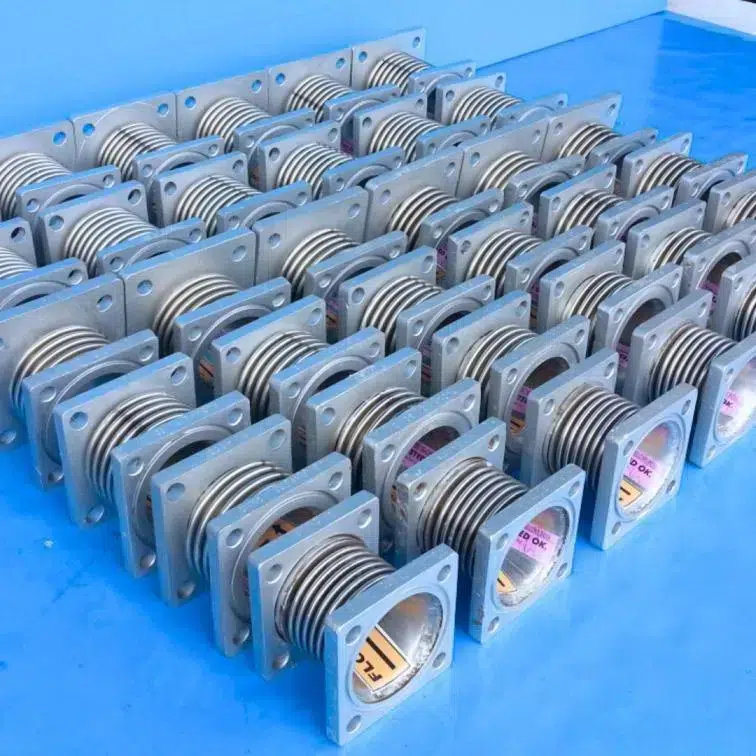
In the special case of Liquefied Natural Gas (LNG) terminals, piping systems must withstand severe conditions, including cryogenic temperatures. The attribute of being flexible is the most important feature in such a case, where piping may be allowed to shift, stress, and thermally expand without sacrificing safety and efficiency. Such a degree of flexibility is required in order to prevent damaging structures and ensure long-term reliability. With the guidance of the best exhaust expansion joints manufacturer, you can prevent your piping system from being damaged.
A flexible piping system is required to accommodate room for movement when processing, storing, and transporting LNG since it offers room for temperature variation, earthquakes, and operating vibrations. Rigid systems burst, leak, and crack at joints, resulting in costly downtime and safety hazards. Flexibility offers safety, life, maintenance, and overall system efficiency to LNG terminal piping.
Advantages of LNG Terminal Piping Flexibility
Flexibility is critical in the design of LNG terminal piping to allow the system to accommodate movement, temperature change, and mechanical loading. The property enhances reliability, safety, and reduces maintenance costs, thereby increasing the infrastructure lifespan.
- Allows for thermal contraction and expansion
LNG is handled and shipped securely at cryogenic conditions. Thermal expansion due to operation or shutdown is responsible for gigantic temperature increases in piping. Expansion of this nature has to be addressed by a flexible and good system without failure in cracking, leakage, or joints. Expansion loops, bellows, and flexible joints form the cornerstone of successfully dealing with such movement. In case you need bellows in your piping system, an exhaust pipe bellows manufacturer will do you justice.
- Decreases equipment and connection stress
Fixed or rigid piping will transfer unhealthy stress to delicate equipment such as storage tanks, valves, and pumps. By having system flexibility, we actually insulate such stress and shield critical components from untimely wear and failure. This not only lowers the risk of flange misalignment but also the likelihood of leakage by a significant margin.
- Enhances long-term reliability and performance
Flexible systems show enhanced fatigue and cracking resistance even under prolonged thermal cycling. This enhanced durability not only adds to the life of the piping system but also provides long-term homogeneous performance. Reduced maintenance and replacement needs reduce the cost of ownership by significant margins, making flexible systems more cost-effective.
- Enhance structural safety
LNG terminals are more likely to be exposed to types of external stresses, i.e., seismic, ground settlement, and thermal cycling. These factors are likely to affect the structural soundness of the terminal. Flexible piping systems come to the rescue in reducing such incidents; these can offer damped shock and vibration dissipation.
This feature not only minimizes the probability of structural failure but also optimizes overall safety and structural integrity, particularly in seismically active regions. Such stringent criteria ensure the integrity of LNG terminals to perform even in changing circumstances.
Conclusion
Pipe design flexibility on LNG terminals is not an option – this is an economic, reliable, and safe requirement. The flexibility allows the system to better withstand thermal, mechanical, and environmental loading stresses, protect the equipment and life, reduce downtime and maintenance expenses, and avoid performance and safety issues. LNG in flexible solution performance is a forward-thinking, innovative solution for infrastructure- and security-sensitive markets such as these.