
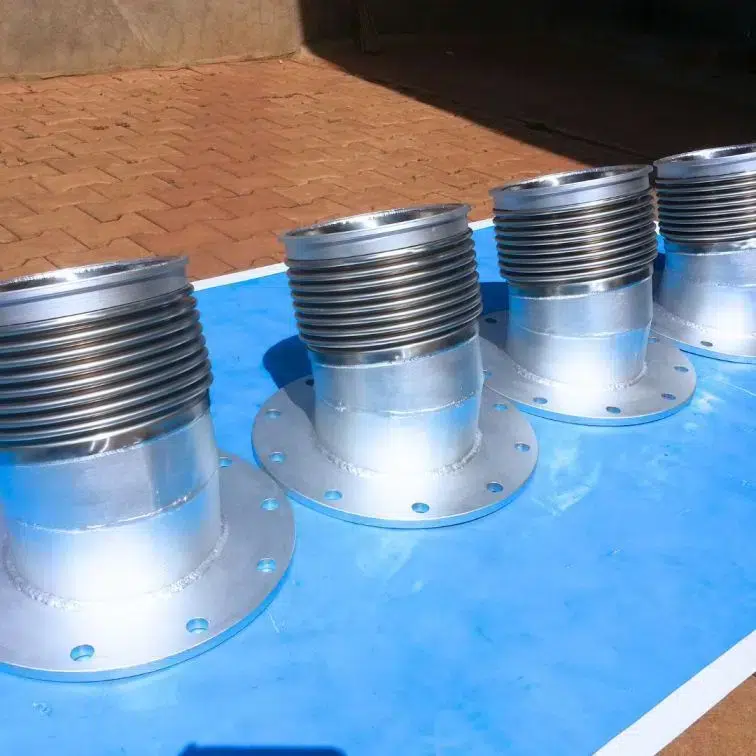
Temperature rarely stays constant in an industrial piping system. One moment, a line may carry a hot fluid or gas; later, it may cool down during shutdown. This repeated change can put every flexible component through a demanding mechanical process. Here comes the significance of metal bellows, which absorb this movement. However, repeated thermal cycling can gradually affect the performance and fatigue life of metal bellows. Understanding this process can help industries choose and maintain expansion joints more effectively.
In this blog, we will discuss how repeated heating and cooling can affect metal bellows. We will also take a closer look at why proper design, material selection, and testing matter for the long-term performance of metal bellows. Are you looking for precision-engineered metal bellows at a competitive price? Look no further and choose Flexpert Bellows, a reputable exhaust pipe bellows expansion joint manufacturer.
How Thermal Cycling Influences Metal Bellows
Here’s how repeated temperature changes can gradually influence the performance and service life of metal bellows.
- Heating and Cooling Create Repeated Movement
The first notable impact of thermal cycling on metal bellows is repeated movement. When temperature rises, metal piping expands. Similarly, when temperature falls, metal piping contracts. A metal bellows expansion joint absorbs this movement and helps reduce stress on connected pipes and equipment. However, problems begin when this movement happens repeatedly. Every cycle makes the bellows convolutions flex, creating repeated stress in the metal.
- Repeated Cycles Can Cause Metal Fatigue
Increased metal fatigue is another prominent impact of thermal cycling on metal bellows. Metal bellows do not have an unlimited fatigue life. Each heating and cooling cycle contributes to the total number of cycles experienced by the bellows. If the design does not properly match the expected movement, repeated stress can eventually lead to fatigue damage and cracking. This is why engineers consider cycle life while designing expansion joints.
- High Temperature Can Add More Stress
Another very significant impact of thermal cycling on metal bellows is stress. Temperature not only causes expansion in metal bellows. Long exposure to high temperatures can also affect material strength and increase the risk of oxidation, corrosion, or creep. This depends mainly on the material and operating environment.
This is where careful material selection comes in. Engineers must consider the actual operating temperature, pressure, medium, and expected movement before selecting a bellows design.
- Corrosion Can Make Thermal Fatigue Worse
Many of us are not aware that thermal cycling and corrosion can work together. Repeated mechanical stress can make a damaged or weakened surface more vulnerable to cracking. Research has shown that corrosive environments can accelerate crack initiation and growth in metal bellows and reduce fatigue life. Therefore, engineers should select materials according to both the temperature and the process medium.
- Design Determines Cycle Life
Thermal cycling does not automatically mean early failure. Good engineering can make a significant difference. We at Flexpert Bellows design multi-ply metallic bellows with attention to pressure- and deflection-induced stresses. A suitable design should also account for alignment, pressure, movement, vibration, temperature range, and expected number of cycles.
- Testing Supports Reliable Performance
Testing plays a vital role in checking how a bellows assembly performs under demanding operating conditions. Fatigue and pressure tests can help identify potential weaknesses before the component enters actual service. For critical applications, proper testing and engineering provide greater confidence in long-term performance.
The Conclusion
Thermal cycling is a crucial part of many industrial operations. However, we shouldn’t overlook its long-term effect on metal bellows. Repeated expansion and contraction can gradually increase fatigue damage, especially when temperature, pressure, corrosion, or movement exceed the original design conditions.
We at Flexpert Bellows offer engineered metallic bellows and expansion joints designed for demanding industrial applications. With attention to cycle life, material selection, movement, and application requirements, we provide dependable solutions for systems exposed to repeated thermal movement. Choose Flexpert Bellows, a leading exhaust expansion joint manufacturer when long-term performance matters.