
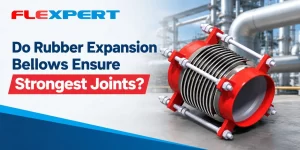
Do Rubber Expansion Bellows Ensure Strongest Joints?
While inspecting a construction site, what is the first thing that comes to mind? Yes, it is the safety concern. Whether it is a building

Are Flexible Joints Non-negotiable in Wastewater Systems?
Are you planning to select bellow joints for water plants? Then it is a must to perform application-specific research. Otherwise, it may lead to early

How Expansion Compensators Support the Dead Weight of a Pipe?
Pipes appear to be firm, but these pipes bend due to heat, pressure, and gravity. In this context, expansion joints have a significant role to

Why Install Anchors Close to Metal Compensators?
The task of metal compensators is important for pipes; however, they need good support to be safe. Anchors play the role of this support. Expansion

Essential Tips for Error-Free Joint Installation: A Comprehensive Guide
A small space may actually make a huge difference when constructing buildings. Due to thermal expansion and contraction that happens in the concrete and other

5 Important Parameters to Specify by Metal Bellows Buyers
Even after placing orders for bellows by carrying out every step carefully, are you not satisfied with the performance? Did you get the wrong parts

How Do Expansion Joints Differ from Flexible Hoses?
Expansion joints and flexible hoses are popular for absorbing movement. Both are helpful in reducing stress on the piping system. However, they may seem to

Key Signs Indicating Failure of Articulated Bellows
Failure of articulated bellows, apart from inconvenience, can be considered a forced outage. Also, it indicates a potential safety incident and unbudgeted repair. Maintenance engineers

How to Choose the Right Joint for Steam Piping Systems
Steam piping systems mainly work under challenging business conditions. High temperatures, excessive pressure, repeated heating and cooling, thermal movement, and vibration can cause significant stress

Thermal Cycling: How It Affects Metal Bellows over Time
Temperature rarely stays constant in an industrial piping system. One moment, a line may carry a hot fluid or gas; later, it may cool down